About Germany
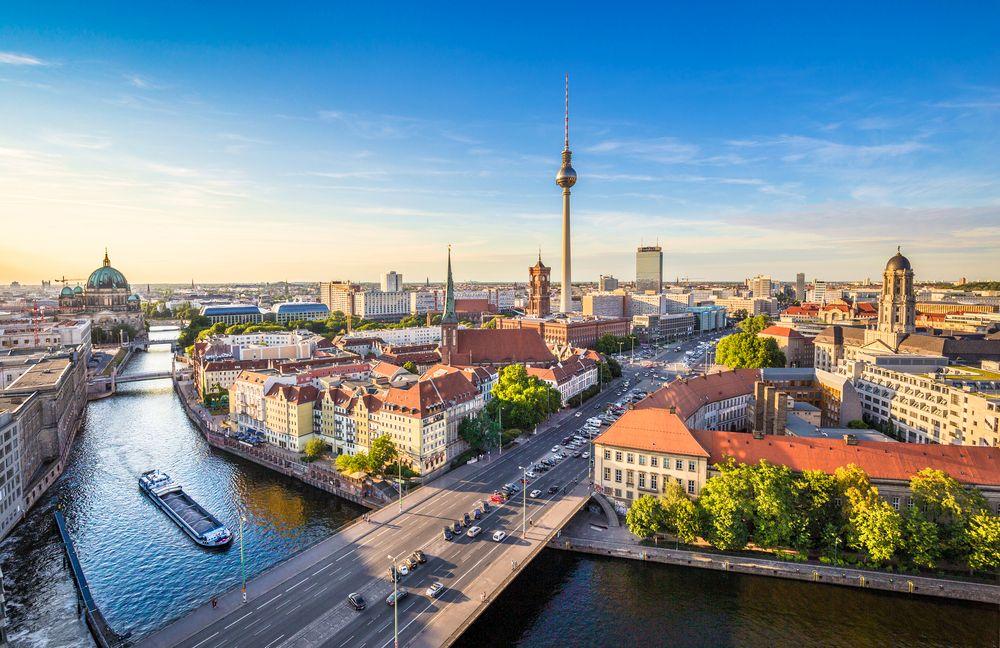
Germany is a Western European country with a landscape of forests, rivers, mountain ranges and North Sea beaches. It has over 2 millennia of history. Berlin, its capital, is home to art and nightlife scenes, the Brandenburg Gate and many sites relating to WWII. Munich is known for its Oktoberfest and beer halls, including the 16th-century Hofbräuhaus. Frankfurt, with its skyscrapers, houses the European Central Bank. It includes 16 constituent states, covers an area of 357,021 square kilometres (137,847 sq mi), and has a largely temperate seasonal climate. It has about 82 million inhabitants. Germany really only became what we understand to be a country in 1814 at the Congress of Vienna where the German Confederation (Deutscher Bund), a loose league of 39 sovereign states was founded. Coming to nationhood late put Germany on a collision course with other established European nations and led in some ways to the turbulent period between 1870 and 1945. After the war Germany sort to rebuild and invested great amounts of money in its engineering and technology driven companies, it also tried relatively successfully to make amends for the blackest moments in European history The Holocaust with a huge amount of educational discussion in schools. Currently in Germany, denial of the Holocaust or that six million Jews were murdered in the Holocaust is a criminal act; violations can be punished with up to five years of prison. In 1991 the Berlin wall came down that separated East Berlin from West this also led to the reunification of Germany a successful project. Germany has a lot for the tourist to do Germany is well known for its diverse tourist routes, such as the Romantic Road, the Wine Route, the Castle Road, and the Avenue Road. The German Timber-Frame Road (Deutsche Fachwerkstraße) connects towns with examples of these structures. Germany's most-visited landmarks include e.g. Neuschwanstein Castle, Cologne Cathedral, Berlin Bundestag, Hofbräuhaus Munich, Heidelberg Castle, Dresden Zwinger, Fernsehturm Berlin and Aachen Cathedral. The Europa-Park near Freiburg is Europe's second most popular theme park resort.
Jewish History, POI & Kosher Establishments in Germany
Jewish settlers founded the Ashkenazi Jewish community in the Early (5th to 10th centuries CE) and High Middle Ages (circa 1000–1299 CE). The community survived under Charlemagne, but suffered during the Crusades. Accusations of well poisoning during the Black Death (1346–53) led to mass slaughter of German Jews, and they fled in large numbers to Poland. After the forming of the German Confederation many Jewish communities began to expand again and by the early 1930s the population was over 500,000. With the rise of the Nazi party before the start of WWII and the increasingly restrictive Nazi policies towards Jews, within 5 years over 300,000 Jews had fled Germany. By the end of the war, an estimated 160,000 to 180,000 German Jews had been killed under the Nazi regime, by the Germans and their collaborators. After the war only around 15,000 Jews remained in Germany, with reunification around 200,000 people of Jewish background emigrated from the former Soviet Union. Berlin, Frankfurt am Main and Munich have the largest Jewish communities. A small percentage of the Jewish community is orthodox, many are traditional or liberal, but a growing number are non-observant to secular. Kosher restaurants can be found in Berlin Munich and Frankfurt other cafes and Chabad organised places can be found elsewhere.