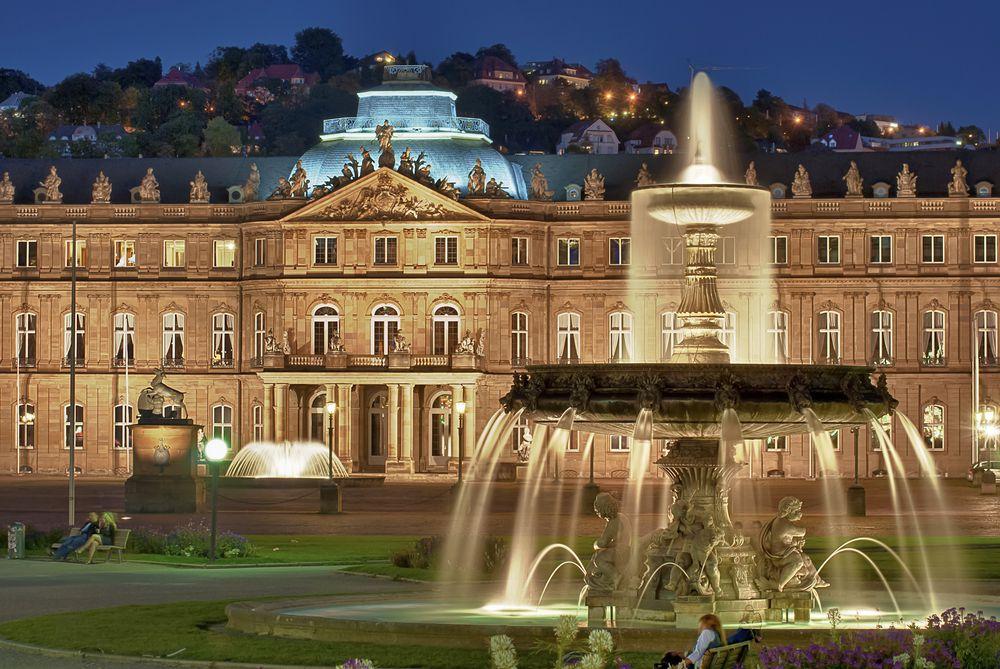
About Stuttgart
Stuttgart is the capital of Baden-Württemberg, Germany, with a population of approximately 600,000 in the immediate city and more than 2,5 million people in the metropolitan area. Stuttgart was founded in the 10th century; its name is a modern version of the original Stutengarten ("mare's garden"). Presently it is the 6th largest city in Germany. It is most famous for its automotive industry - both Porsche and Mercedes-Benz have their headquarters in Stuttgart and both have car museums. Other museums in Stuttgart include a modern arts a historical and a musical instruments museum amongst others. Stuttgart is a big city with a small-town atmosphere.Stuttgart also has a zoo. Stuttgart has many seasonal festivals all year round. Winters last from December to March. The coldest month is January with an average temperature of 0 °C (32 °F). Snow cover tends to last no longer than a few days although it has been known to last several weeks at a time as recently as 2010. The summers are warm with an average temperature of 20 °C (68 °F) in the hottest months of July and August. Summers last from May until September.
Jewish History, POI & Kosher Establishments in Stuttgart
Originally Stuttgart was a city where Jews were not allowed to live, during the late 1600's some wealthy Jewish families were allowed to live in Stuttgart but this only lasted until 1737 when they were all expelled. It wasn't until after 1806 when Napolean declaired the area of Wurttemberg a Kingdom that Jewish life began to prosper. Bad Canstatt, now part of Stuttgart but then a separate village, also had an increasingly populous and influential Jewish community during the mid-to-late-1800s, and it was during this time that Albert Einstein's parents met in Canstatt and were married at the synagogue there. Meanwhile, in Stuttgart, city Rabbi Josef Mayer was elevated to the rank of nobility by the King, in recognition for his contributions to literature, poetry, and religious texts as he was an important figure in codifying religiously liberal Reform Judaism. Within 100 years, the population of Stuttgart's Jews went from 124 in 1825 to 4,548 in 1925, and they had fully equal legal rights under the law. After Kristallnacht, the Jewish population had been reduced to 2,413. By the end of the war only about 10% of the population remained. It is estimated that the population today is around 500 people. A new synagogue was built on the site of the old one in the 1950s. Many of Stuttgart's Jewish population today hails from the former Soviet Union, seeking refuge here to avoid persecution.