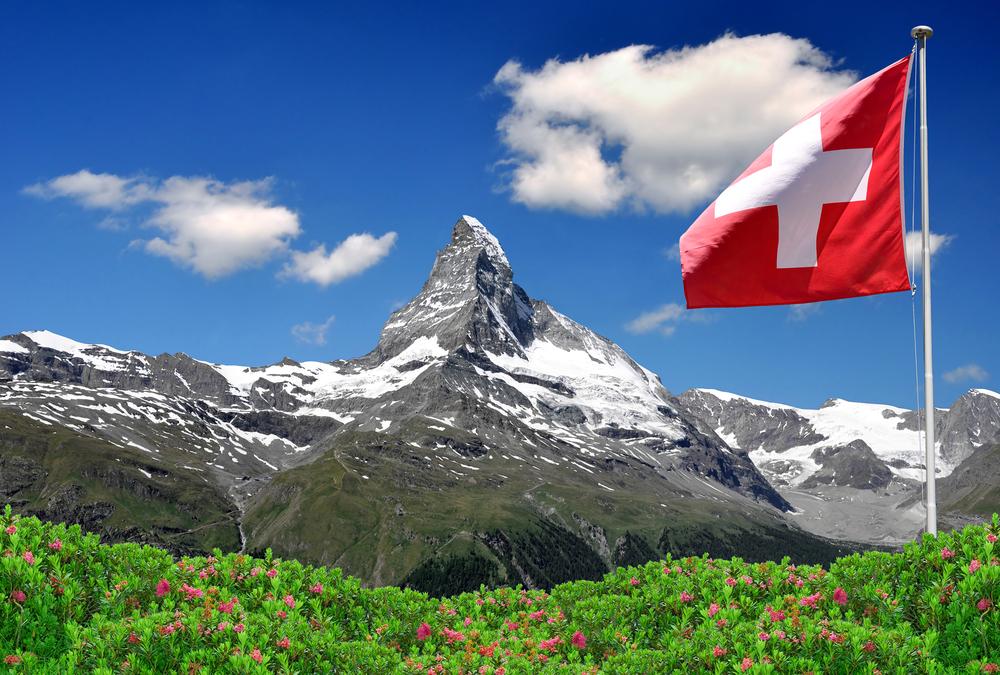
About Switzerland
Switzerland is a mountainous Central European country, home to numerous lakes, villages and the high peaks of the Alps. Its cities contain medieval quarters, with landmarks like capital Bern’s Zytglogge clock tower and Lucerne’s wooden chapel bridge. The country is also known for its ski resorts and hiking trails. Banking and finance are key industries, and Swiss watches and chocolate are world renowned. The establishment of the Old Swiss Confederacy dates to the late medieval period, resulting from a series of military successes against Austria and Burgundy. Swiss independence from the Holy Roman Empire was formally recognized in the Peace of Westphalia in 1648. Switzerland is one of the most developed countries in the world, with the highest nominal wealth per adult. The Swiss climate is generally temperate, but can vary greatly between the localities, from glacial conditions on the mountaintops to the often pleasant near Mediterranean climate at Switzerland's southern tip. Tourism began with British mountaineers climbing the main peaks of the Bernese Alps in the early 19th century, the alps are still a very popular destination both in winter for the skiing and winter sports and in summer for the beautiful scenery. The most visited Swiss tourist attractions are first, the Rhine Falls, second, the Berne Bear exhibit (both for free), and third, with over 1.8 million paid entries: Zoo Basel.
Jewish History, POI & Kosher Establishments in Switzerland
The largest communities are Zurich (6,800), Geneva (4,400), and Basel (2,600). Jews are also to be found in other cities and towns throughout the Swiss Federation. Some 61% of the Jews live in the German-speaking part of the country and 36% in the French-speaking part. During the Shoah, Swiss Jews were protected by the state's neutrality. However, a number of Swiss initiatives prevented the entry of Jewish refugees. The Swiss community is presided over mostly by the Schweizerischer Israelitischer Gemeindebund (SIG), founded in 1904 to oppose the restriction on shechita. Synagogues of a variety of denominations operate in Switzerland: traditional, ultra-Orthodox, Reform, Conservative, and Sephardi. Zurich has four synagogues, Geneva three, Basel two, and Lugano two. Synagogues are also to be found in Baden, Berne, Fribourg, La Chaux-de-Fonds, Lausanne, Lucerne, Vevey-Montreux, St. Gallen, and Winterthur. Rabbis are employed in Zurich, Geneva, and Basel, where an Orthodox seminary is active. The SIG plays a role in the distribution of kosher food, which, due to the shechita prohibition, is mostly imported. The site of the first Zionist Congress in 1897, is the Musiksaal of the Stadt-Casino in Basel. The Jewish museum in Basel chronicles the history of Swiss Jewry, and in its courtyard are tombstones from the 13th century. Among the cemeteries of particular historical interest are those in Endingen and Lengnau. Large numbers of Jewish tourists visit Switzerland at all times of the year. Consequently, in certain resort towns, there are hotels that provide kosher facilities.