About Uganda
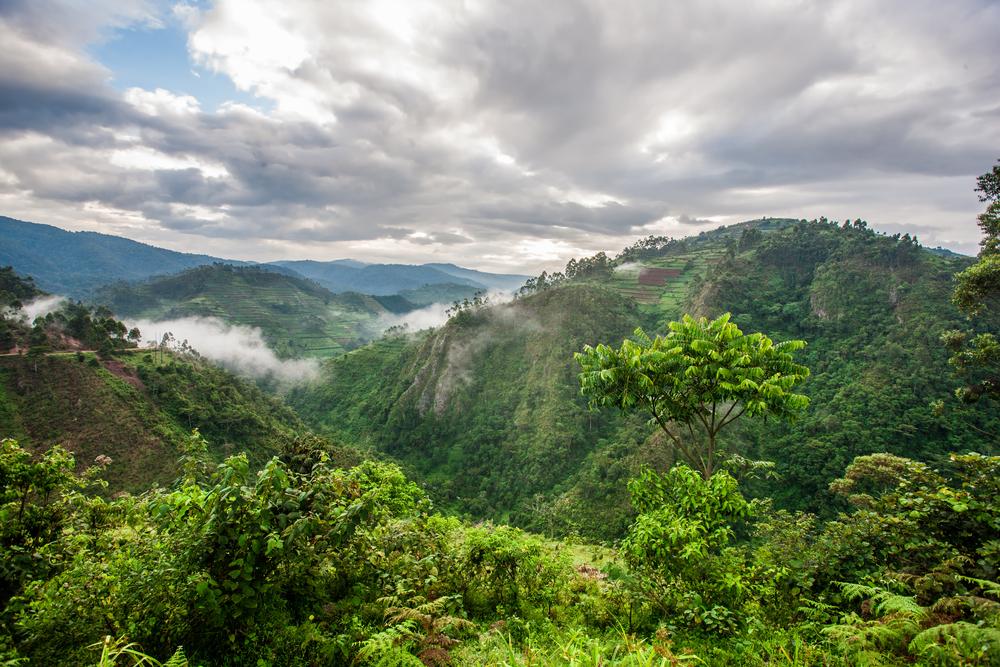
Uganda is a landlocked country in East Africa whose diverse landscape encompasses the snow-capped Rwenzori Mountains and immense Lake Victoria. Its abundant wildlife includes chimpanzees as well as rare birds. Remote Bwindi Impenetrable National Park is a renowned mountain gorilla sanctuary. Murchison Falls National Park in the northwest is known for its 43m-tall waterfall and wildlife such as hippos. Uganda takes its name from the Buganda kingdom, which encompasses a large portion of the south of the country, including the capital Kampala. The people of Uganda were hunter-gatherers until 1,700 to 2,300 years ago, when Bantu-speaking populations migrated to the southern parts of the country. Uganda has 60 protected areas, including ten national parks: Bwindi Impenetrable National Park and Rwenzori Mountains National Park (both UNESCO World Heritage Sites), Kibale National Park, Kidepo Valley National Park, Lake Mburo National Park, Mgahinga Gorilla National Park, Mount Elgon National Park, Murchison Falls National Park, Queen Elizabeth National Park, and Semuliki National Park. Uganda is sunny most of the year with temperatures rarely rising above 29 degrees (84 degrees Fahrenheit). The average annual temperature is about 26 degrees Celsius (78° Fahrenheit). The rainy season is from March till May and October till November. Light rain season falls in November and December. There has been increased investment in tourism, particularly in travel accommodation and related facilities; this has enhanced tourists' experience in the country. Adventure tourism, ecotourism and cultural tourism are being developed.
Jewish History, POI & Kosher Establishments in Uganda
The Abayudaya (Abayudaya is Luganda for "People of Judah",) are a Baganda community in eastern Uganda near the town of Mbale who practice a form of Judaism. They are devout in their practice, keeping kashrut, and observing Shabbat. The arrival of a foreign Jew known as "Yosef" in 1920 whose ancestral roots are believed to have been European, contributed much towards the community's acquisition of knowledge about the seasons in which Jewish Festivals such as Pesach, Shavuot, Rosh Hashanah, Yom Kippur, Succot, and others take place. A source in the Abayudaya community confirms that the first Jew to visit the community was Yosef, who stayed with and taught the community for about six months, and would appear to have first brought the Jewish calendar to the Abayudaya community. There are several different villages where the Abayudaya live. Most of these are recognized by the Reform and Conservative movements of Judaism. However, the villagers of Putti are still seeking an Orthodox conversion and practice strict Orthodox Rabbinic Judaism. The Abayudaya maintain a Kosher diet and slaughter their own animals in accordance with its regulations. An interesting latest development occurred in 2012 with the possible recognition of the Putti Abayudaya by Israel and the Orthodox Jewish world, thanks to the efforts of Rabbi Shlomo Riskin, founding Chief Rabbi of Efrat and Chancellor of the Ohr Torah Stone institute, in coordination with PVAO Putti Village Assistance Organization.