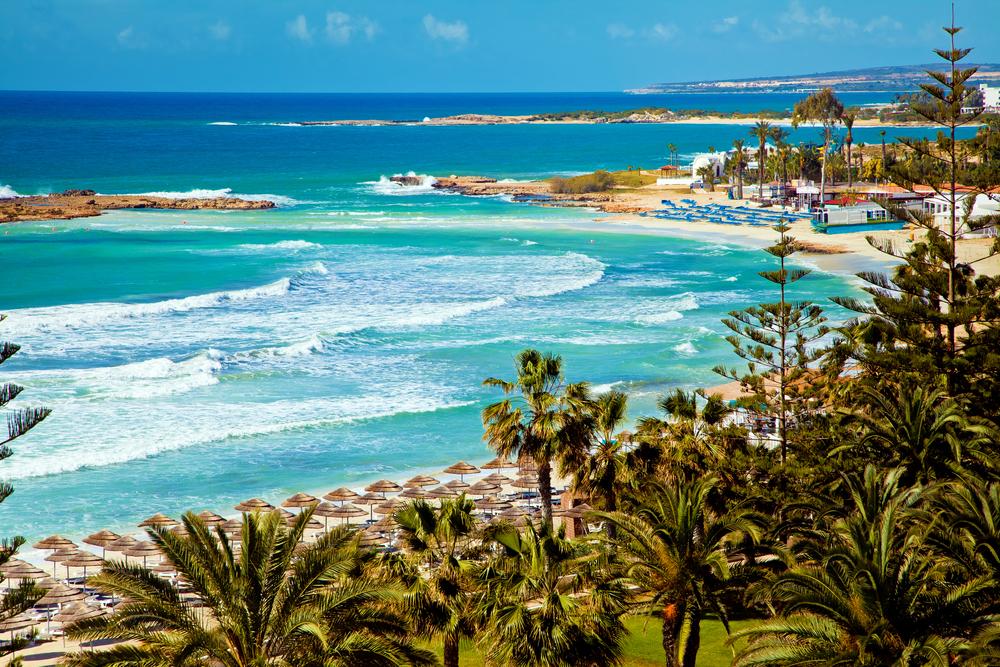
About Cyprus
The Republic of Cyprus occupies the southern part of the island of Cyprus in the eastern Mediterranean. The island (and capital city Nicosia) is divided with Turkey to the north. Known for beaches, it also has a rugged interior with wine regions. Coastal Paphos is famed for its archaeological sites relating to the cult of Aphrodite, including ruins of palaces, tombs and mosaic-tiled villas. The earliest known human activity on the island dates to around the 10th millennium BC. Archaeological remains from this period include the well-preserved Neolithic village of Khirokitia, and Cyprus is home to some of the oldest water wells in the world. Cyprus was settled by Mycenaean Greeks in two waves in the 2nd millennium BC. Cyprus has a subtropical climate – Mediterranean and semi-arid type. Cyprus was part of the Ottoman Empire and after the collapse of the Empire it became part of the British administration, becoming a Crown Colony in 1925. After independence in 1960 the two different populations the Greeks and the Turks fought for control of the Island. After the cease-fire in 1974 Turkish troops had control of the Northern section of the island and Greece had control of the south, this is the situation that remains today, although both sides are trying to bring about an easing of the situation and to allow travel through between the two parts.
Jewish History, POI & Kosher Establishments in Cyprus
The history of the Jews in Cyprus dates back to the 3rd century BCE, after trade relations had been established between Cyprus and the Land of Israel. The Jews had close relationships with many of the other religious groups on the island and were seen favourably by the Romans. During the war over the city of Ptolemais between Alexander Jannaeus and Ptolemy IX Lathyros, King of Cyprus, many Jews were killed. During the war the Jewish citizens remained committed in their allegiance to King Lathyros. Under the leadership of Artemion, the Cypriot Jews participated in the great rebellion against the Romans ruled by Trajan in 117 AD. and they are reported by Dio Cassius to have massacred 240,000 Greeks. Cyprus was conquered by the Ottoman Empire after their war with Venice. During Ottoman rule the Jewish community of Cyprus thrived due to the influx of Sephardi Jews from Ottoman lands, who had emigrated en masse to the Ottoman territories after expulsion from Spain in 1492. Famagusta became the main centre of the Ottoman Jewish community in Cyprus. Some 450 Jewish families live in Cyprus today. During the summer months, the number of the Island's Jewish population increases drastically due to summer vacations of Jewish people, mostly from Israel. A part of the congregants of the community centres are Jewish business people working on the Island.
Kosher food and hotels in Cyprus
The majority of the Jewish community members, as well as the kosher and Jewish life activities in Cyprus are in Larnaca and Limassol. There are Chabad centers in Paphos and Ayia Nappa. There are two Kosher Hotels, The Blue Lagoon and the Caprice Spa, open year round for Kosher travelers. There are great
Passover Programs in Cyprus and throughout
Europe.