About Venice
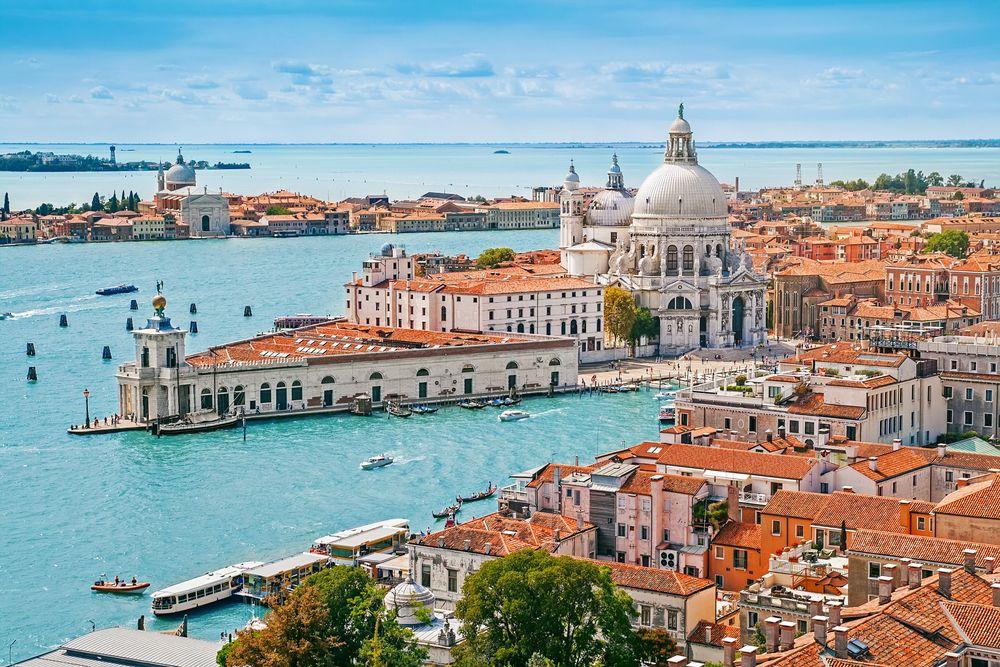
Venice, capital of northern Italy’s Veneto region, is built on more than 100 small islands in a marshy lagoon in the Adriatic Sea. Its stone palaces seemingly rise out of the water. There are no cars or roadways, just canals and boats. The Grand Canal snakes through the city, which is filled with innumerable narrow, maze-like alleys and small squares. Venice is the capital of the Veneto region. In 2009, there were 170,098 people residing in Venice's commune, of whom around 60,000 live in the historic city of Venice. Having started in Ancient Roman times by the late 13th century, Venice was the most prosperous city in all of Europe. At the peak of its power and wealth, it had 36,000 sailors operating 3,300 ships, dominating Mediterranean commerce. Venice's leading families vied with each other to build the grandest palaces and support the work of the greatest and most talented artists. Venice is full of beautiful sites, museums, churches, art galleries, and shops. Venice is one of the most important tourist destinations in the world for its celebrated art and architecture. The city has an average of 50,000 tourists a day.
Jewish History, POI & Kosher Establishments in Venice
The history of the Jewish Community of Venice, which is the capital of the Veneto region of Italy has been well known since the medieval era. Venice gave Judaism and indeed the word Ghetto, this was the place where Jews were allowed to live in Venice. Napoleon was seen as something of a liberator by the city's Jewish population, although it can be argued they had lived with fewer restrictions in Venice. He removed the gates of the Ghetto and ended the restrictions on when and where Jews could live and travel in the city. The Ghetto is till where the Jewish Community and its five synagogues still persist. The Jewish Museum of Venice is situated in the Campo of the Ghetto Novo, between the two most ancient Venetian synagogues. It is a little but very rich museum founded in 1953 by the Jewish Community of Venice. Today, Venice's Jewish population is growing again, although its numbers are small and are skewed toward Lubavitch Jews who have moved into Venice from other cities in Italy and abroad. For Orthodox Jewish tourists, the increased vitality of Venice's Jewish community means that kosher hotels and eating places are now readily available.