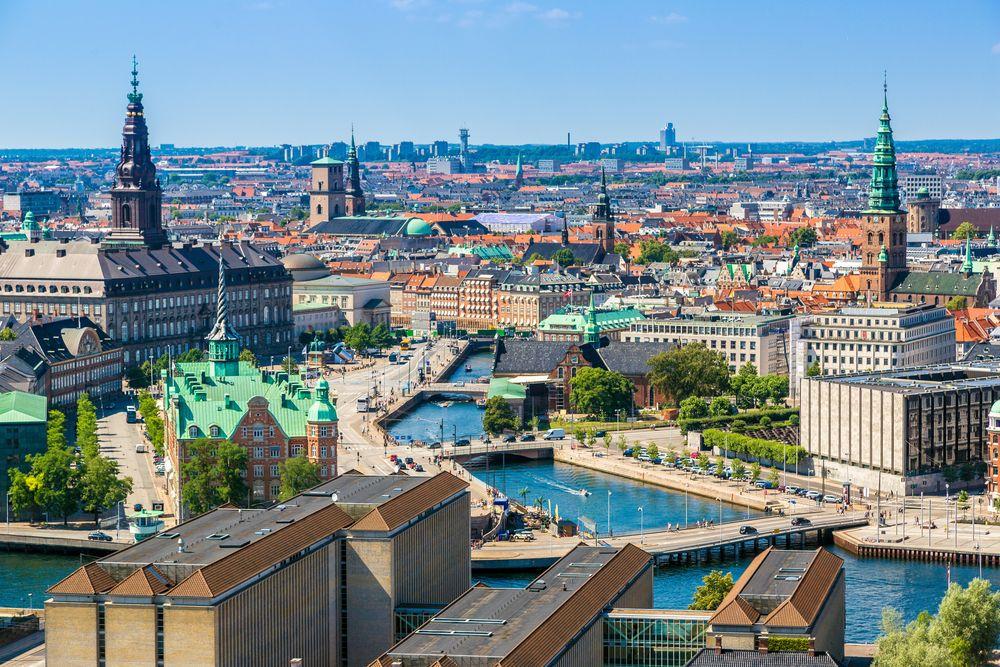
About Copenhagen
Copenhagen, Denmark’s capital, sits on the coastal islands of Zealand and Amager, linked to Malmo in southern Sweden by the Öresund Bridge. Indre By, the central district, contains 18th-century, rococo Frederiksstaden, home to the royal family’s Amalienborg Palace. The city's center also has the Christiansborg parliament building and the Renaissance Rosenborg Castle, which has a museum of royal artifacts and a popular garden. Denmark has an urban population of 1,163,698 (as of 1 January 2015) and a metropolitan population of 1,991,114 (as of 1 January 1015). Founded as a fishing village in the 10th century, Copenhagen became the capital of Denmark-Norway in the early 15th century. Apart from being the national capital, Copenhagen also serves as the cultural hub of Denmark and wider Scandinavia. Since the late 1990s, it has undergone a transformation from a modest Scandinavian capital into a metropolitan city of international appeal in the same league as Barcelona and Amsterdam. Copenhagen has a wide array of museums of international standing. Copenhagen has a wide selection of art museums and galleries displaying both historic works and more modern contributions. Copenhagen has one of the highest number of restaurants and bars per capita in the world.
Jewish History, POI & Kosher Establishments in Copenhagen
There are some 7,000 Jews in Denmark, most of them in the Copenhagen area where there are several synagogues. There has been a Jewish presence in Denmark for more than 400 years. Denmark was the first of the three Scandinavian countries in which Jews were permitted to settle, and in 1684 an Ashkenazi community was founded in Copenhagen. In 1943, with a German roundup of Jews imminent, about 90% of the Jewish population was spirited to safety in neutral Sweden. All in all, 5,191 Jews, plus 1,301 people of part Jewish parentage, and 686 Christians married to Jews were secretly transported to Sweden. The Jewish Community in Denmark (Mosaisk Troessamfund) is an officially recognized religious community with approximately 1,400 members. Most of the Jewish organizations and institutions have their offices within the Jewish Community center. The Great Synagogue in Copenhagen was completed in 1833 and is the seat of the Chief Rabbinate. There is also another small Orthodox synagogue which maintains a mikvah, and there is a Chabad Rabbi. Shir Hatzafon is the Progressive Jewish synagogue and community in Denmark. Kosher food is readily available, there is a hotel in Hornbeak during the summer where one can have kosher food.