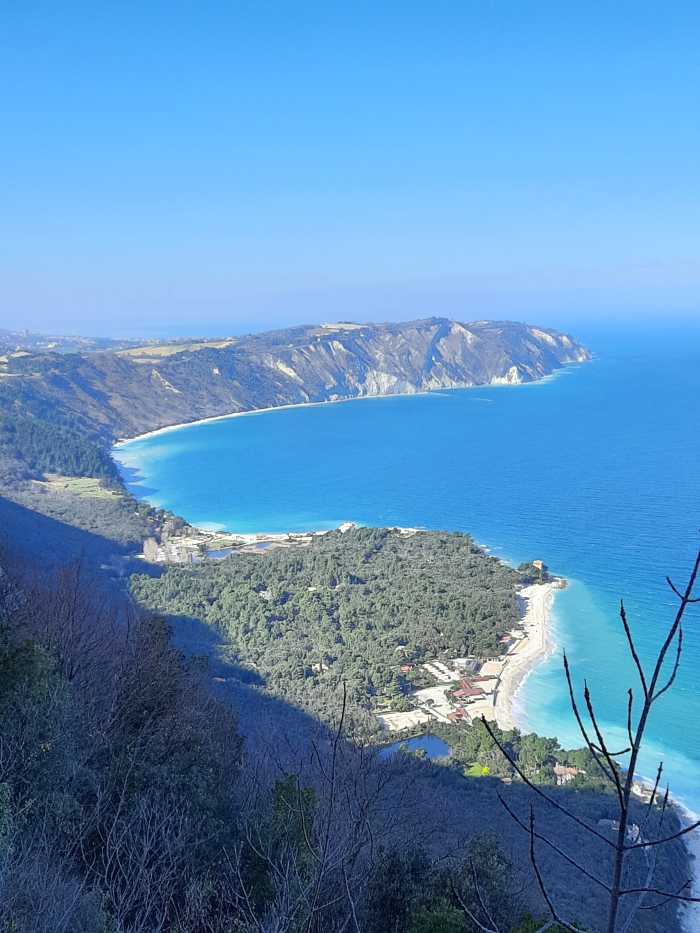
The Marche Region of Italy
The Marche Region: Undiscovered Area of Central Italy that will Surprise you!
As a local, I cannot, but promote my own birthplace, the Marche region! </br> Join me for a trip to beautiful landscapes and rich Jewish heritage
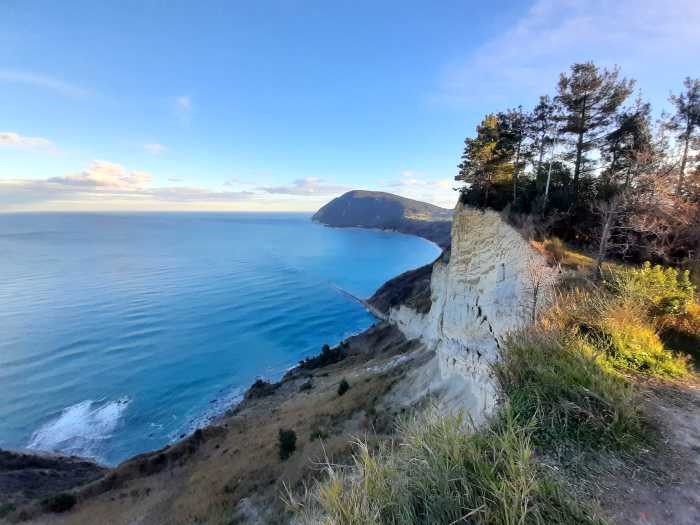
Conero Riviera in the Marche Region
The Marche Region of Italy is a hidden gem tucked between the towering Apennines mountains and the sparkling Adriatic Sea. This area is a patchwork of breathtaking scenery, featuring majestic mountains, rolling hills, and a coastline that calls out for a leisurely stroll. But it's not just the natural beauty that makes Marche special—it's also a place rich in history, especially for the Jewish communities that have called this region home for centuries.
As we set out to discover the Jewish landmarks in Marche, we'll also get a sense of the region's dramatic past. Marche was once in the thick of the power plays of the Papacy, and the marks of old battles and shifting power can still be felt. Every little town and village here has a story to tell about winning their freedom from the Church's rule. You can see it right in the town squares, where proud inscriptions remind passersby of the fight for liberty.
So come along with me. We're going to step back in time and explore the rich Jewish traditions and the spirited history of this captivating Italian region.
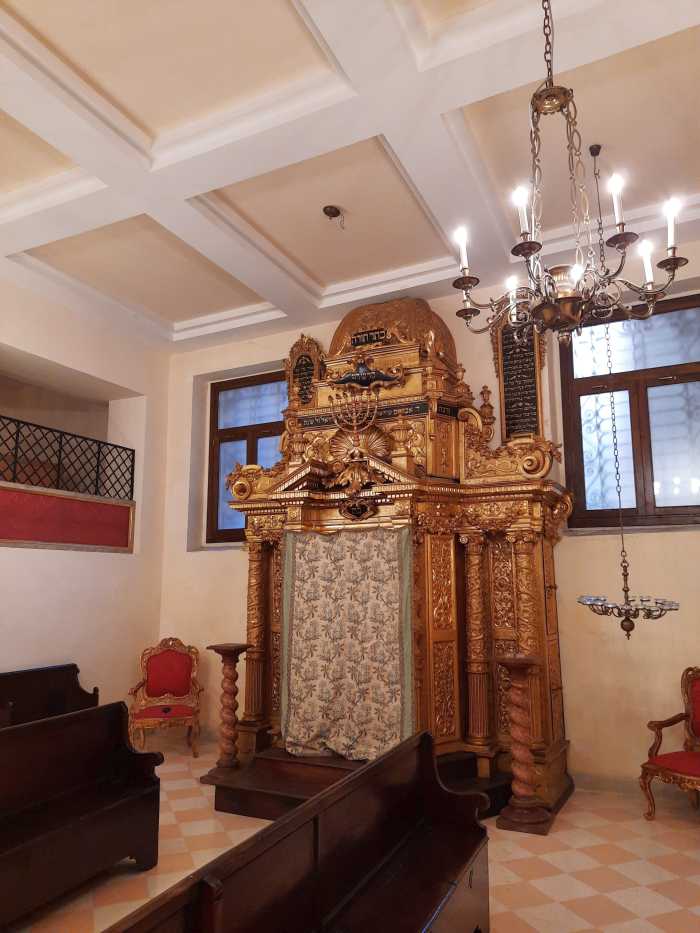
Ancona's Italian Synagogue
Exploring Ancona's Jewish Heritage
Our journey through the Jewish heritage of the Marche region begins in its capital, Ancona. This city is home to one of the oldest and most prominent Jewish communities in Italy, with historical records of Jewish presence dating back to the 10th century. The community flourished over the centuries, largely due to Ancona's vital port and its bustling trade with the Levant.
Under the Papal State's rule, Jews in Ancona, like in many other places, were confined to a ghetto established in 1555. This ghetto, the second-largest in central Italy after Rome's, remained until 1848 when it was finally dismantled. Following the ghetto's abolition, Ancona's urban landscape was redesigned. However, the historical areas of Via Astagno and Via del Bagno still stand as a testament to that time. These streets are where you can visit Ancona's two surviving synagogues: the Levantine Synagogue and the Italian Synagogue, each echoing a story of resilience and faith.
Once you've soaked in the history of the synagogues, a visit to the Ancient Jewish Cemetery, known locally as "Campo degli Ebrei" or "Field of the Jews," is a must. Nestled between Cappuccini Hill and Mount Cardeto, this cemetery is among the largest and most well-preserved Jewish burial grounds in Europe. It houses 178 gravestones with Hebrew inscriptions, spanning from the 15th to the 19th centuries, all solemnly aligned towards Jerusalem.
Not far from the tranquility of the cemetery, you'll find a less-trodden gem: the Lighthouse. While it may not be a typical tourist spot, it's a local favorite, and for a good reason. Standing by the Lighthouse, you are treated to spectacular panoramic views that capture the essence of Ancona—the city, the Adriatic Sea, and the bustling port. It's a perfect spot to reflect on the city's rich tapestry of history and nature.
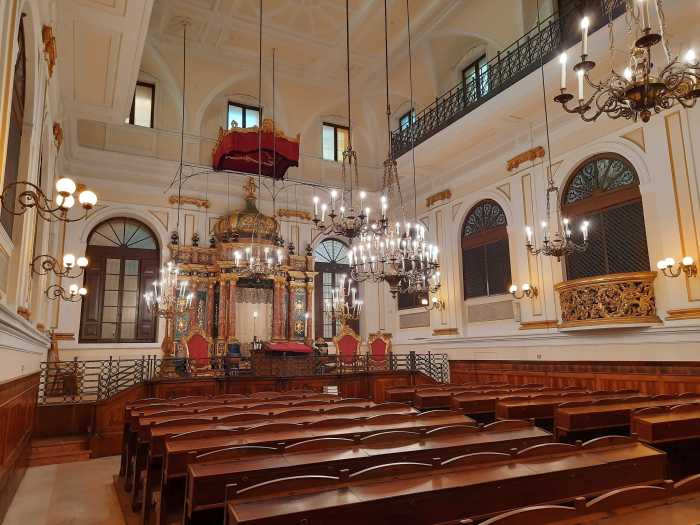
Ancona's Levantine Synagogue
Journeying to Ancona's Harbor and the Conero Riviera
Continuing from the historic and serene high points of Ancona, our path leads us downward to the vibrant harbor area, brimming with its own unique attractions. Here, you'll encounter the majestic Arch of Trajan, a grand monument that has stood as a silent witness to the passage of time and the comings and goings of ancient traders. The Mole Vanvitelliana, an artificial peninsula and architectural marvel, stretches out into the sea, inviting closer inspection. And then there’s Porta Pia, one of Ancona’s main gates, which ushers visitors from the past into the present buzz of the city’s life.
But there’s another gem I’m eager for you to see—The Passetto. This green haven is Ancona’s emerald treasure, a park perched in a stunning panoramic position high above the sea, against the backdrop of the Conero mountain. The Passetto is famous for its impressive stairways that carve a path through the rock, leading right down to the sea. This natural marvel is a stone's throw away from the historical center, allowing for an easy and scenic walk to the shore.
Now, let's take a moment to relax along the striking Conero coastline, which we've just admired from the lighthouse. Here, the brilliant white cliffs and untouched beaches sharply contrast with the deep blue of the Adriatic, creating a view you'll want to savor. Choose a beach club (lido) that appeals to you, rent an umbrella and sunbeds, and enjoy a refreshing swim.
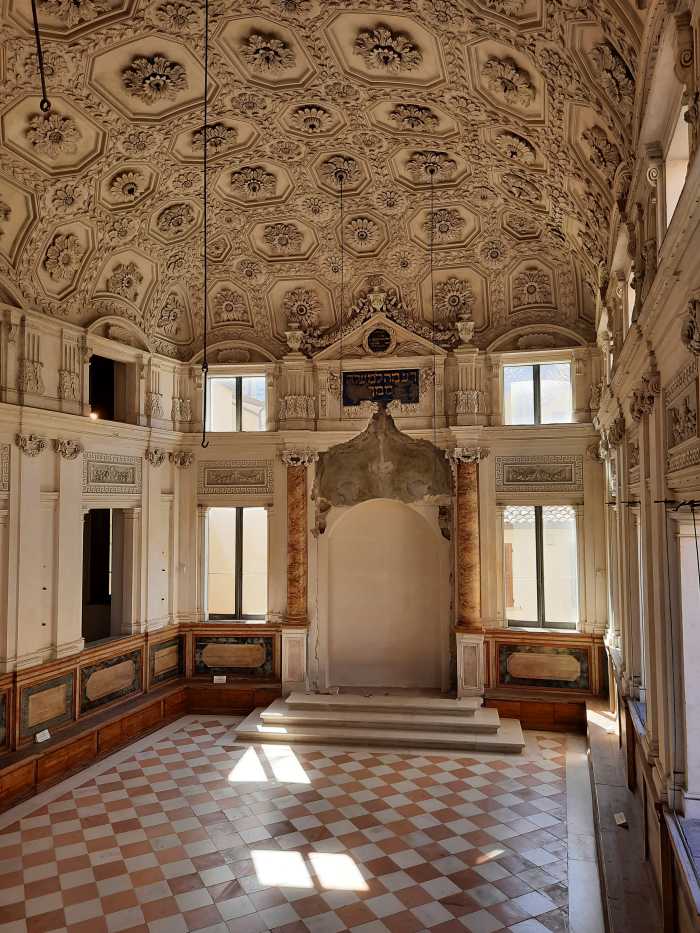
Pesaro's Synagogue
Unveiling Urbino: A Renaissance Jewel and Its Jewish Legacy
On the next day of our journey, prepare to be captivated by the enchanting town of Urbino, a Renaissance treasure with a city center that has been meticulously preserved through the ages. Strolling through its streets is like walking back in time, and the grandeur of the Palazzo Ducale is bound to leave you spellbound—a palace so inspiring, it even influenced an epic scene in the "Star Wars" saga.
Urbino gained its prominence during the Renaissance, largely thanks to its visionary ruler, Federico di Montefeltro. In the latter half of the 15th century, he embarked on an ambitious project to transform Urbino into a city that epitomized modernity, rational design, and aesthetic splendor. This picturesque city is also the birthplace of Raphael, a painter whose fame knows no bounds.
The Jewish community found a welcoming home in Urbino as early as the 14th century. Duke Federico di Montefeltro, celebrated for his enlightened stance, invited Jewish people to settle within his duchy's limits and engage in commerce. Under his rule, Jews enjoyed the same rights and privileges as their Christian neighbors. Yet, with the passing of the last Montefeltro, this era of tolerance came to a sudden halt. The Urbino Jewish community, once thriving under the duke's protection, found themselves subject to the Papacy's stringent anti-Jewish laws.
This shift in fortune is mirrored in the art of the period. For instance, Paolo Uccello's "The Miracle of the Desecrated Host" showcased in Urbino's Palazzo Ducale, reflects the changed attitudes towards Jews during this time. As a result, the Jewish population was compelled to establish a ghetto, within which they constructed a synagogue that still stands as a marker of their history and resilience. Urbino, much like Ancona, is also home to a Jewish cemetery. This resting place occupies a scenic vantage point over the town, offering a space for reflection on the enduring spirit of its Jewish heritage.
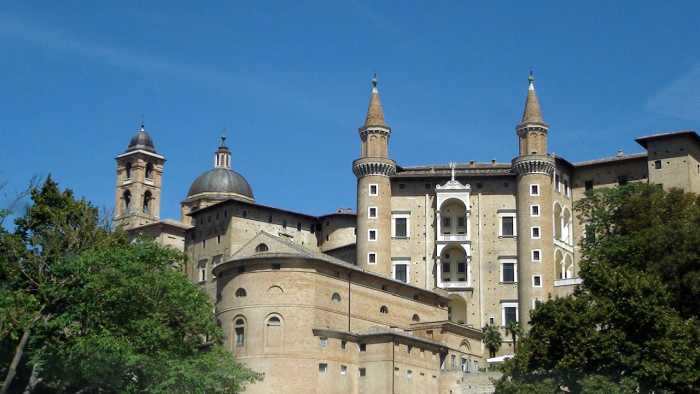
Urbino's Ducal Palace
Stay tuned, for the coming attractions in the Marche region. As in the near future you will hear more and more about this region so close to Tuscany and Umbria!
Read more articles from our Hidden Gems of Italy series:
Echoes of the Past: Unraveling Trieste's Jewish Legacy
A Walk Through History: Exploring Ferrara's Jewish Heritage
Beyond Rome: The Enchanting Villages of Anagni and Alatri
Explore the Charm of Casate Monferrato
Get in Touch with the oldest Jewish community in Tuscany
The Jewish beauty of Florence
Mantua: First stop in the Renaissance cities of Northern Italy
Pitigliano: "Little Jerusalem" in the Tuscan Maremma Region
Cividale del Friuli: Jewish Tours of Italy off the Beaten Path
The Charming Padova (Padua)
Pietro Migliori from La Tour I-Talya. LaTour I-Talya is a project established and managed by a team of Italian Jews working together with one of the largest and most prestigious Italian Tour Operators. LaTour I-Talya specializes in tour packages which focus on the amazingly rich Jewish historical and cultural heritage found throughout Italy.