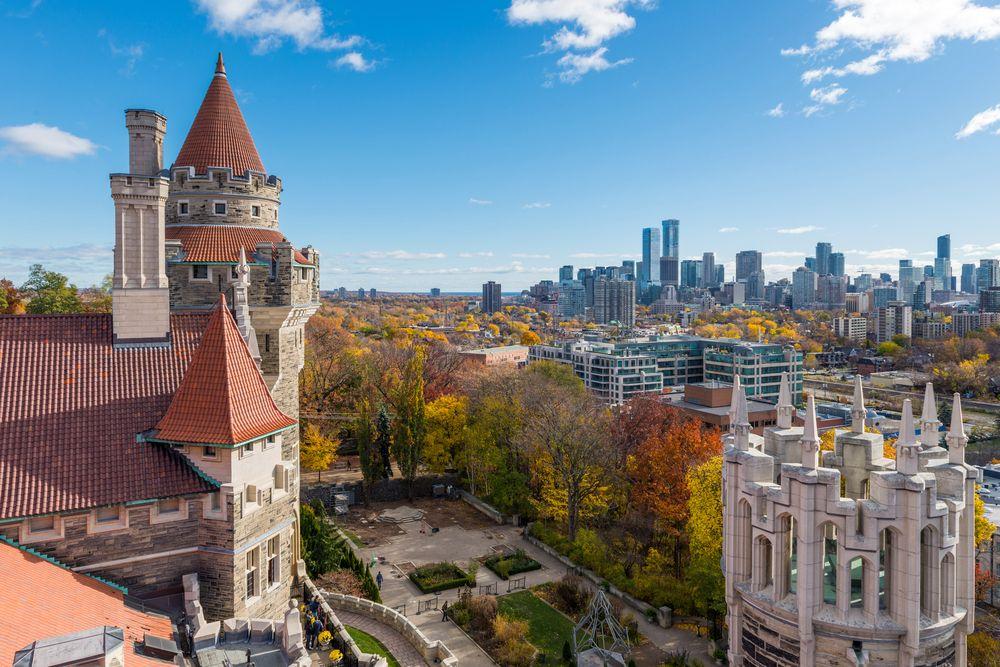
About Toronto
Toronto, the provincial capital of Ontario, Canada, is a large, ethnically diverse city sprawling along Lake Ontario’s north-western shore. A dynamic metropolis with a core of soaring skyscrapers, all dwarfed by the iconic CN Tower was the tallest building in the world from when it was built in 1979 until 2007, it also features abundant green spaces, from the orderly oval of Queen’s Park to 400-acre High Park and its trails, sports facilities and zoo. Toronto is situated on a broad sloping plateau intersected by a vast network of rivers, deep ravines, and urban forest. 11.5% of Toronto's land base is maintained parkland. Toronto theatre and performing arts scene has more than fifty ballet and dance companies, six opera companies, two symphony orchestras and a host of theatres. The city is home to the National Ballet of Canada, the Canadian Opera Company, the Toronto Symphony Orchestra, the Canadian Electronic Ensemble, and the Canadian Stage Company. The Royal Ontario Museum (ROM) is a museum of world culture and natural history. The Art Gallery of Ontario contains a large collection of Canadian, European, African and contemporary artwork, and also plays host to exhibits from museums and galleries all over the world
Jewish History, POI & Kosher Establishments in Toronto
The History of the Jews in Toronto refers to the history of the Jewish community of Toronto, Ontario. Jews have resided in Toronto since the early 19th century. Since the 1970s, the city has been home to the largest Jewish population in Canada and become a centre of Jewish Canadian culture. Toronto's Jews have played an important role in the development of the city. Bathurst Street has been the heart of the Jewish community of Toronto for many decades. Since the early twentieth century, Jews have lived around Bathurst Street south of Bloor Street east to Spadina Avenue (particularly in the Kensington Market district) and west to beyond Christie Pits. After World War II, wealthier members of the community moved to Forest Hill. Today, much of the Jewish community resides along the street from north of St. Clair Avenue to south of Lawrence Avenue and beyond the city limits at Steeles Avenue, extending to Elgin Mills Road in Richmond Hill. Since the early 1970s, the northern stretch of Bathurst has become one of the centres of the Russian Jewish community in Toronto. According to the 2001 census, 164,150 Jews lived in Toronto.