About Hungary
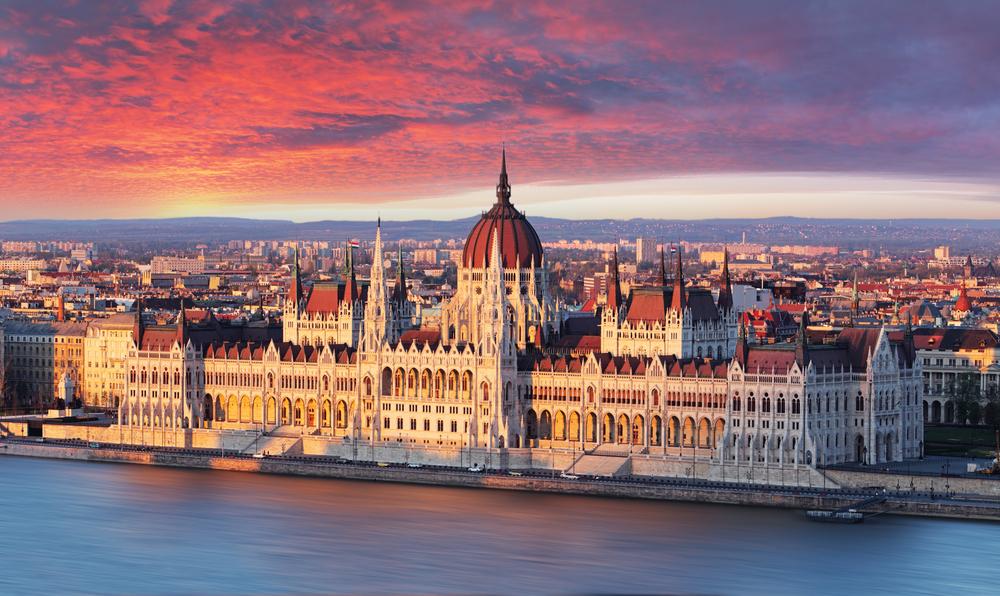
Hungary is a landlocked country in Central Europe. Its capital, Budapest, is bisected by the Danube River. Its cityscape is studded with architectural landmarks from Buda’s medieval Castle Hill and grand neoclassical buildings along Pest’s Andrássy Avenue to the 19th-century Chain Bridge. Turkish and Roman influence on Hungarian culture includes the popularity of mineral spas, including at thermal Lake Hévíz. Following centuries of successive habitation the foundation of Hungary was laid in the late 9th century by the Hungarian grand prince Árpád in the conquest of the Carpathian Basin. Hungary's current borders were established in 1920 by the Treaty of Trianon after World War I, when the country lost 71% of its territory and 58% of its population including 32% of ethnic Hungarians. Hungary was the world's thirteenth most visited tourist destination country in 2002. Hungary's tourist season is from April through October. July and August are the best tourist months. Budapest is the country's most popular tourist destination. Budapest became one of Central Europe's most popular tourist attractions in the 1990s. Attractions in the city include Buda Castle which houses several museums including the Hungarian National Gallery, the Matthias Church, the Parliament Building and the City Park. The city has many museums, three opera houses, and thermal baths. Buda Castle, the Danube River embankments and the whole of Andrássy Avenue have been recognized as an UNESCO World Heritage Site. Lake Balaton in western Hungary is the largest freshwater lake in Central Europe. It is the second most important tourist destination in Hungary.
Jewish History, POI & Kosher Establishments in Hungary
The Hungarian Jewish community is the largest in East Central Europe. Most Hungarian Jews live in the capital, Budapest, which has some 20 working synagogues. The first Jews living in what is today Hungarian territory were inhabitants of the Roman province Pannonia and settled there in the 2nd century CE. Three legions were sent to Judea from Pannonia to beat the revolt (132–135) led by Bar Kochba. The victorious troops brought Jewish slaves to Aquincum (today the northwestern part of Budapest) and Savaria (Szombathely). Apart from the slaves, Jewish merchants from Rome are also assumed to have travelled to Pannonia. After the annexation of Hungary by the Ottoman Turks, life was peaceful as long as the various ethnic groups paid taxes. With the expulsion of the Ottoman Turks, many formerly prosperous Jews moved out of the country or fell victim to murderous rampages. Hence, Jews all but disappeared from Hungary toward the end of the 17th century. In 1867, Hungarian Jews were granted the same political and civil rights as Christians. During that time, Reform Judaism was born. In Reform synagogues, Hungarian was used as the primary language for religious services. After the war, some 200 Jewish communities were reconstituted, but most dwindled rapidly due to migration to Budapest and emigration from the country. In 1946, anti-Jewish sentiment led to the pogroms in Kunmadaras, Miskolc and elsewhere. Communist rule resulted in the closure of many Jewish institutions and the arrest of Jewish activists. Beginning in 1998, an annual Jewish Summer Festival hasbeen held in Budapest featuring exhibitions, concerts, dance performances, and film. Also every summer, around 1500 Jewish campers from over 20 countries attend Camp Szarvas, which is sponsored by the Ronald S. Lauder Foundation and the American Jewish Joint Distribution Committee (JDC). The camp is located on the banks of the Körös River in the resort town of Szarvas, Hungary. In Budapest there are more than ten kosher butchers, as well as a kosher bakery and restaurant. Hungary exports matzot, kosher wine, spirits and meat to other countries.