About Belgium
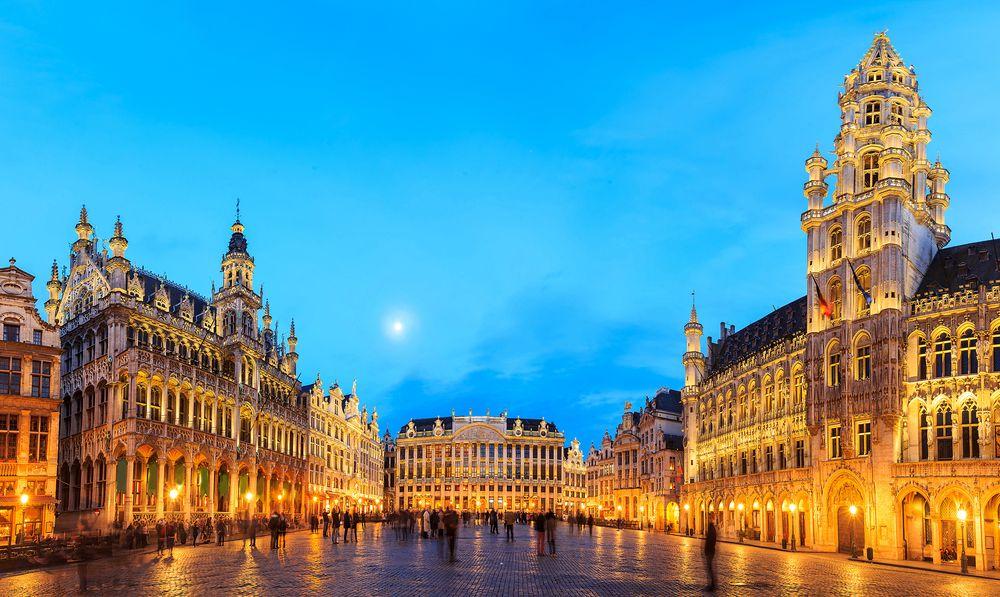
Belgium, a country in Western Europe, is known for medieval towns, Renaissance architecture and as headquarters of the European Union and NATO. The country has distinctive regions including Dutch-speaking Flanders to the north, French-speaking Wallonia to the south and a German-speaking community to the east. The bilingual capital, Brussels, has ornate guildhalls at Grand-Place and elegant art-nouveau buildings. The name 'Belgium' is derived from Gallia Belgica, a Roman province in the northernmost part of Gaul that before Roman invasion in 100 BC, was inhabited by the Belgae, a mix of Celtic and Germanic peoples. In 1830, the Belgian Revolution led to the separation of the Southern Provinces from the Netherlands and to the establishment of a Catholic and bourgeois, officially French-speaking and neutral, independent Belgium under a provisional government and a national congress. Tourism in Belgium is one of Belgium's industries. Its accessibility from elsewhere in Europe makes it a popular tourist destination. Much of the tourism industry is located either on the heavily developed coastline or in the Ardennes. Brussels and the Flemish cities of Bruges, Ghent, Antwerp, Leuven and Mechelen, the Flemish Cities of Art, attract many cultural tourists. Much tourism in Brussels is business tourism.
Jewish History, POI & Kosher Establishments in Belgium
The Belgian Jewish community currently numbers around 42,000 (out of a total population of 10.5 million), most of whom live either in Brussels or Antwerp, the two largest cities. Jews arrived in what is today Belgium when the Romans first settled the land over 2,000 years ago. In the 15th and 16th centuries, a large number of Sephardic Jews expelled from Spain also moved to the Low Countries. After 1713, Austrian rule in Belgium promoted a more open Jewish society, and there was also some Ashkenazi immigration. The status of Jews in Belgium improved under French and Dutch rule as well. In 1831, Belgium became an independent kingdom. Whereas Jews in the mainly French-speaking capital Brussels are mostly secular, the Dutch-speaking port city of Antwerp has Europe’s largest Hasidic community, including followers of the traditions of Belz, Ger, Czortkow, Lubavitch, Satmar and Vishnitz. Belgium has 45 active synagogues, 30 of which, all Orthodox, are in Antwerp. Brussels has more than 10 synagogues, including two Reform congregations – one of them English speaking – and three Sephardic synagogues. Whereas Antwerp has an abundance of kosher restaurants, food stores, and Jewish bookshops, such facilities are relatively sparse in Brussels, although there are two well attended community centres. A Jewish Museum in central Brussels informs visitors about the history of Belgian Jewry. The communities of Brussels (15,000) and Antwerp (15,000) are the main centers of Belgian Jewry. Significantly smaller communities are located in Arlon, Liege, Mons, Ostende, Charleroi, and Ghent. Total Jewish population: 30,000 Jews