About Ireland
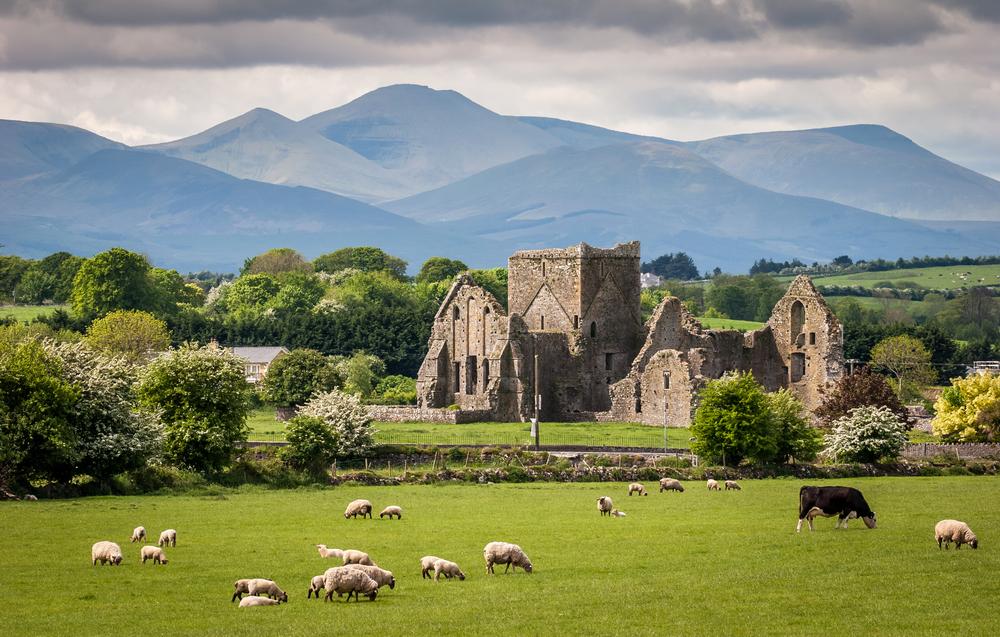
Politically, Ireland is divided between the Republic of Ireland (officially named Ireland), which covers five-sixths of the island, and Northern Ireland, which is part of the United Kingdom, in the northeast of the island. In 2011, the population of Ireland was about 6.4 million, ranking it the second-most populous island in Europe after Great Britain. Just under 4.6 million live in the Republic of Ireland and just over 1.8 million live in Northern Ireland. The earliest evidence of human presence in Ireland is dated at 10,500 BC. Gaelic Ireland had emerged by the 1st century CE. The island was Christianised from the 5th century onward. Following the Norman invasion in the 12th century, England claimed sovereignty over Ireland. However, English rule did not extend over the whole island until the 16th–17th century Tudor conquest, which led to colonisation by settlers from Britain. The island's lush vegetation, a product of its mild climate and frequent rainfall, earns it the sobriquet the Emerald Isle. Overall, Ireland has a mild but changeable oceanic climate with few extremes. There are three World Heritage Sites on the island: the Brú na Bóinne, Skellig Michael and the Giant's Causeway. A number of other places are on the tentative list, for example the Burren, the Ceide Fields and Mount Stewart. Some of the most visited sites in Ireland include Bunratty Castle, the Rock of Cashel, the Cliffs of Moher, Holy Cross Abbey and Blarney Castle. Historically important monastic sites include Glendalough and Clonmacnoise, which are maintained as national monuments in the Republic of Ireland. Dublin is the most heavily touristed region and home to several of the most popular attractions such as the Guinness Storehouse and Book of Kells. The west and south west, which includes the Lakes of Killarney and the Dingle peninsula in County Kerry and Connemara and the Aran Islands in County Galway, are also popular tourist destinations.
Jewish History, POI & Kosher Establishments in Ireland
Today, the Jewish community of Ireland is almost exclusively concentrated in the capital city of Dublin. Irish Jewry has been experiencing a great decline over the past 30 years, in part due to economic stagnation and a lack of opportunities. During this period, the emigration of many of the younger, active Jews to the United Kingdom, Israel, and the United States halved the community's population and diminished its level of activity. In recent years, particularly during the period of Irish prosperity, this was partially offset by immigration to the country. Jews arrived in Ireland during the reign of William the Conqueror. Henry III made his viceroy the custodian of Jews in Ireland; his successor, Edward I, rescinded this protection, banishing the Jews from his kingdom in 1290. Ireland's chief rabbi supervises the country's synagogues (all in Dublin except for one in Cork). Past chief rabbis of Ireland have included Rabbi Isaac Herzog and Rabbi Immanuel Jakobovits who became, respectively, the chief rabbis of Israel and of the British Commonwealth. The chief rabbi also supervises the kashrut of Dublin's kosher establishments. Apart from the Orthodox religious establishment, which includes two synagogues—the Dublin Hebrew Congregation and Machzekei Hadas—a Progressive congregation is also active in Dublin.