About Turkey
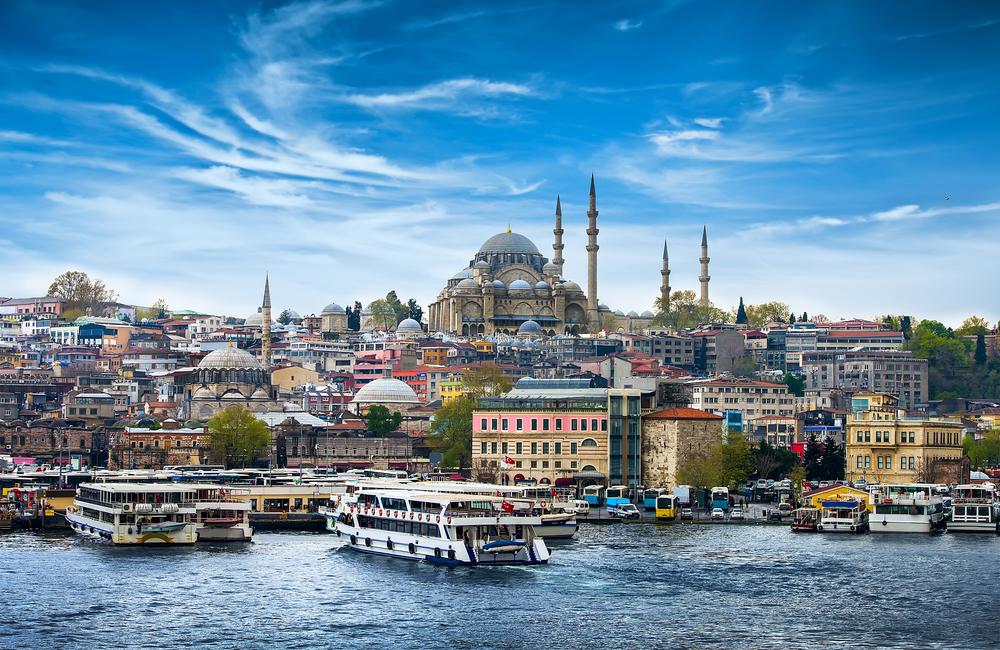
Turkey is a nation straddling Eastern Europe and western Asia with cultural connections to ancient Greek, Persian, Roman, Byzantine and Ottoman empires. Cosmopolitan Istanbul, on the Bosphorus Strait, is home to the iconic Hagia Sophia, with its soaring dome and Christian mosaics, the massive 17th-century Blue Mosque and the circa-1460 Topkapı Palace, former home of sultans. Ankara is Turkey’s modern capital. The area of Turkey has been inhabited since the Paleolithic period. After Alexander the Great's conquest, the area was Hellenized, a process which continued under the Roman Empire and its transition into the Byzantine Empire. In the mid-14th century the Ottomans started uniting Anatolia and created an empire encompassing much of Southeast Europe, West Asia and North Africa, becoming a major power in Eurasia and Africa during the early modern period. Turkey's current administration headed by president Tayyip Erdoğan has reversed many of the country's earlier reforms which had been in place since the founding of the modern republic of Turkey, such as Freedom of the Press, a Legislative System of Checks and Balances, and a set of standards for secularism in government, as first enacted by Atatürk. Tourism in Turkey has experienced rapid growth in the last twenty years, and constitutes an important part of the economy. The Turkish Ministry of Culture and Tourism currently promotes Turkish tourism under the Turkey Home name. Turkey has 13 UNESCO World Heritage Sites, such as the "Historic Areas of Istanbul", the "Rock Sites of Cappadocia", the "Neolithic Site of Çatalhöyük", "Hattusa: the Hittite Capital", the "Archaeological Site of Troy", "Pergamon and its Multi-Layered Cultural Landscape", "Hierapolis – Pamukkale", and "Mount Nemrut"; and 51 World Heritage Sites in tentative list, such as the archaeological sites or historic urban centres of Göbekli Tepe, Gordion, Ephesus, Aphrodisias, Perga, Lycia, Sagalassos, Aizanoi, Zeugma, Ani, Harran, Mardin, Konya and Alanya. Turkey hosts two of the Seven Wonders of the Ancient World: the Mausoleum in Halicarnassus and the Temple of Artemis in Ephesus.
Jewish History, POI & Kosher Establishments in Turkey
The great majority of the Jews live in Istanbul. There are also communities in Izmir (2,300) and about 100 Jews in Ankara, Bursa, and Adana. The community is 96% Sephardi. Most members of the Jewish community earn their living as industrialists, artisans and traders. There are also many in the free professions and engineering. About 100 Karaites live in Turkey, but for the most part they do not consider themselves a part of the Jewish community and do not take any part in its activities. Today the Jewish community consists of appromately 18,500 people. Relics of Jewish settlement in Anatolia from the 4th century b.c.e. have been unearthed in the Aegean region, making the Jewish community in Turkey one of the oldest in the world. In general the Jews welcomed the military successes of the Ottomans in the 14th and 15th centuries. When the Ottomans captured Bursa in 1324, they found a Jewish community that had been persecuted during long centuries of Byzantine rule. Over the next decades, the country became a haven for Jews fleeing repression and expulsion from various parts of Europe, including Hungary, France, Spain, Sicily, Salonika, and Bavaria. The Jewish community of Turkey is recognized by the state through its chief rabbinate. At its head is the haham bashi, as the chief rabbi is called. The community operates hospitals in Istanbul and in Izmir and also several homes for the aged. There are several youth and family social clubs, and some of these include libraries, sports facilities, and even discotheques. There are 17 synagogues in Istanbul, all but one of which are Sephardi. There are ten synagogues in Izmir and one each in the remaining communities. These are served by five rabbis and cantors, all of whom reside in Istanbul or Izmir. Kosher meat is produced in Istanbul and in Izmir. Although the synagogues are Orthodox, most people tend toward Conservative religious observance.