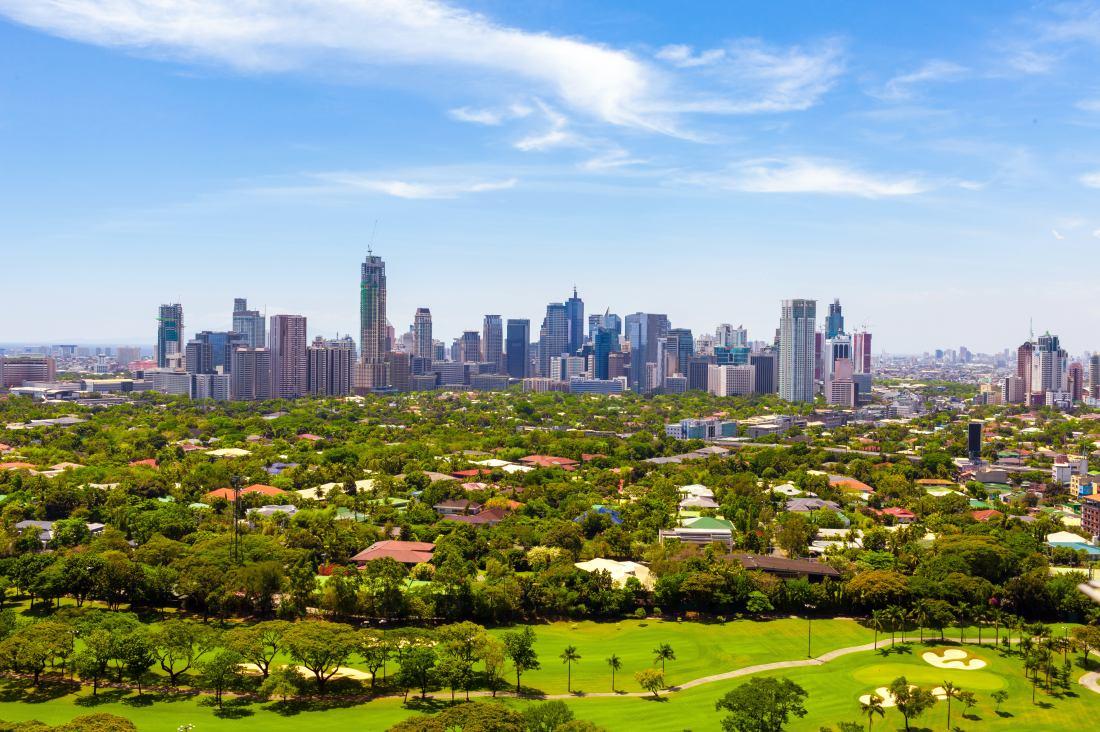
About Makati
Makati is the financial center of the Philippines, With a population of 582,602, Makati is the 17th-largest city in the country. Parts of the city were once subject to the pre-Hispanic Kingdom of Namayan, whose capital is now in the Santa Ana district of Manila. The Spanish then assigned the area to the town of Santa Ana de Sapa and in the 1600s began to be developed as a pilgrimage center around the churches of Our Lady of Guadalupe (now Our Lady of Grace) and of Saints Peter and Paul in what is today the población, built by missionary friars to attract worshippers, and also as a farming community. By 1898, Spain ceded the Philippines and other overseas possessions to the United States after the former's defeat in the Spanish–American War. Together with the rest of the Philippines, Makati lies entirely within the tropics. Its proximity to the equator means that the temperature range is very small, rarely going lower than 20 °C (68 °F) or going higher than 38 °C (100 °F). However, humidity levels are usually very high which makes it feel much warmer. Makati is home to a number of fine art museums, colonial-era churches and recreation areas.
Jewish History, POI & Kosher Establishments in Makati
The Jewish Association of the Philippines is based at 110 H.V. Dela Costa, Makati. Because of the Spanish influence on the Islands any Jews would have been 'Conversos' and there was no organised Jewish community. The first permanent settlement of Jews in the Philippines during the Spanish colonial years began with the arrival of three Levy brothers from Alsace-Lorraine, who were escaping the aftermath of the Franco-Prussian War in 1870. When the Philippines became an American concern, American Jewish citizens took advantage of this new frontier. The arrival of American military forces to the Philippines brought Jewish servicemen who decided to remain in the islands after their military discharge and become permanent residents. The Jewish community of Manila reached its maximum population of about 2,500 members by the end of 1941, having increased eightfold since it first received refugees mainly from Germany in 1937. As of 2005, Filipino Jews numbered at the very most 500 people. The country's only synagogue, Beth Yaacov, is located in Makati City, as is the Chabad House.