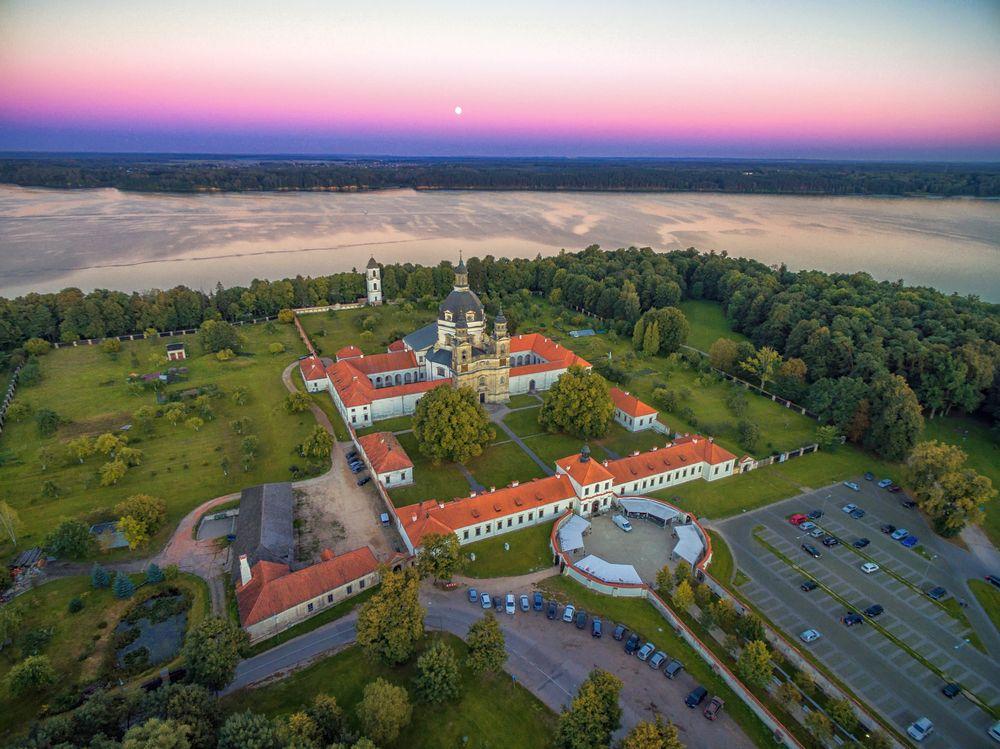
About Kaunas
Kaunas is a city in south-central Lithuania. At the confluence of the Neris and Nemunas rivers, Kaunas Castle is a medieval fortress housing historical exhibitions. To the east, the old town is home to the Kaunas Cathedral Basilica, with its ornate interior, and the Gothic spires of the Hanseatic House of Perkūnas. Laisvės Alėja, a pedestrianized street lined with trees and cafes, crosses the city from west to east. Before Lithuania regained independence, the city was generally known in English as Kovno, the traditional Slavicized form of its name; the Polish name is Kowno; the Belarusian name is Koўнa, Kowna, in German include Kaunas and Kauen. The city covers 15,700 hectares. Parks, groves, gardens, nature reserves, and agricultural areas occupy 8,329 hectares. In 1990 Lithunia became independent for the first time in 50 years.
Jewish History, POI & Kosher Establishments in Kaunas
Jews are first known to have lived in Kovno as early as 1410 when they were brought forcibly as prisoners of war by the Grand Duke Vytautas. Many of those Jews were later active as traders between Kovno and Danzig (today's Gdansk, Poland). Living conditions for many Jews were squalid. In 1858, archaic living restrictions were relaxed and all but 6,000 of the city's 35,000 Jews flocked to the Old Town in search of something better. During the inter-war period Kaunas had a Jewish population of 35,000–40,000, about one quarter of the city's total population. Kaunas was a centre of Jewish learning, and the yeshiva in Slobodka (Vilijampolė) was one of Europe's most prestigious institutes of higher Jewish learning. Kaunas had a rich and varied Jewish culture. There were almost 100 Jewish organizations, 40 synagogues, many Yiddish schools, 4 Hebrew high schools, a Jewish hospital, and scores of Jewish-owned businesses. It was also an important Zionist centre. The occupation of Soviet troops was accompanied by arrests, confiscations, and the elimination of all free institutions. Jewish community organizations disappeared almost overnight. Soviet authorities confiscated the property of many Jews, while hundreds were exiled to Siberia. The Yiddish name is Kovne (קאָװנע). Kaunas has a small synagogue and congregation. Built in 1871, it is today the only remaining synagogue.