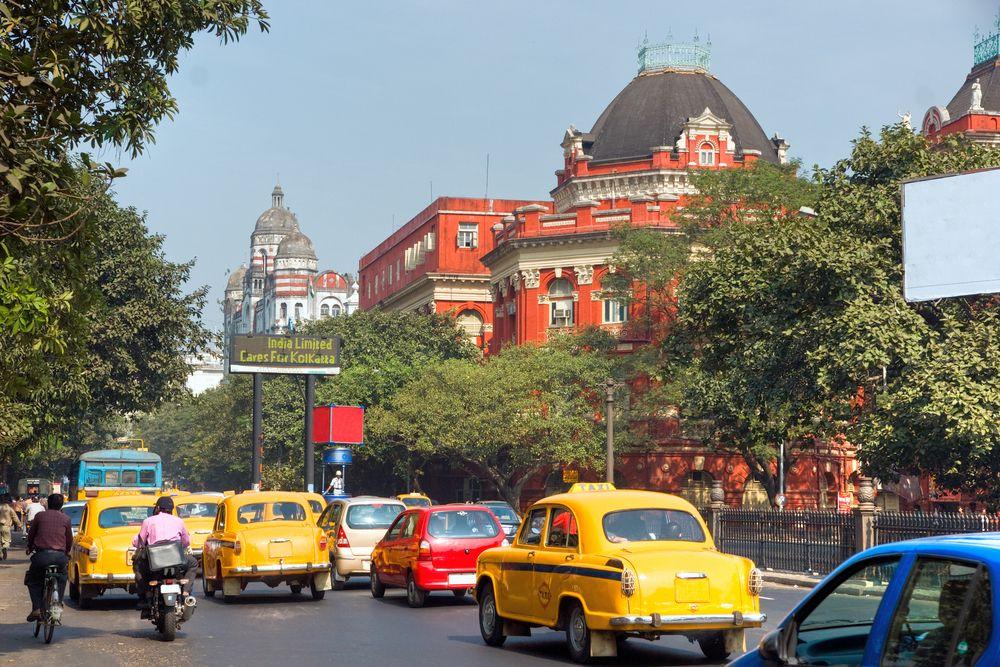
About Kolkata
Kolkata (formerly Calcutta) is the capital of India's West Bengal state. Founded as an East India Company trading post, it was India's capital under the British Raj from 1773-1911. Today it’s known for its grand colonial architecture, art galleries and cultural festivals. It’s also home to Mother House, headquarters of the Missionaries of Charity, founded by Mother Teresa, whose tomb is on site. As of 2011, the city had 4.5 million residents. As a growing metropolitan city in a developing country, Kolkata confronts substantial urban pollution, traffic congestion, poverty, overpopulation, and other logistic and socioeconomic problems. In the late 17th century, the three villages that predated Kolkata were ruled by the Nawab of Bengal under Mughal suzerainty. After the Nawab granted the East India Company a trading licence in 1690, the area was developed by the Company into an increasingly fortified trading post. Nawab Siraj ud-Daulah retook Kolkata in 1756 after the Company started evading taxes and due to increasing militarization of the fort. The East India Company retook it in the following year, and defeated the Nawab of Bengal (Mir Qasim) in 1764 when he tried to squeeze them out of the region. The annual mean temperature is 26.8 °C (80.2 °F); monthly mean temperatures are 19–30 °C (66–86 °F). Summers (March–June) are hot and humid, with temperatures in the low 30s Celsius; during dry spells, maximum temperatures often exceed 40 °C (104 °F) in May and June.
Jewish History, POI & Kosher Establishments in Kolkata
From the late eighteenth till the mid-twentieth century, there was a thriving “Bagdadi” Jewish community in Calcutta. Jewish traders from the Middle East prospered in British India. Originally Judeo-Arab in identity, they attained a Judeo-British one. Calcutta Bagdadi Jews settled in a cosmopolitan urban environment, met no prejudice, and excelled in all spheres of endeavor. They played a key role in the city’s mercantile development, engaged in governance and civic affairs, built impressive synagogues, established schools, and constructed magnificent buildings. Though never more than 4,000 in number, the community was influential and thoroughly integrated in the fabric of Calcutta. By the 1960s, only 400 to 500 remained in Calcutta, making it difficult to sustain Jewish community life. Today, there are barely 20 left, many old and infirm.